
What Each Rose Color Means: A Gifting Guide
What Each Rose Color Means: A Gifting Guide
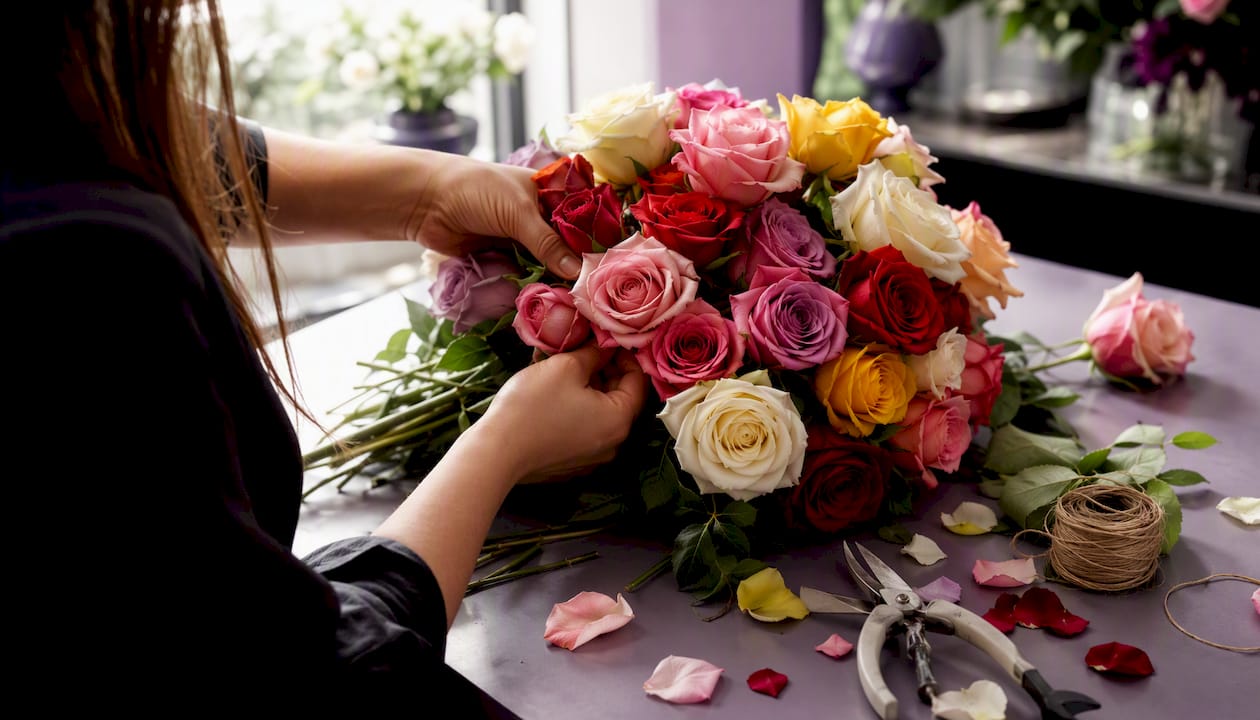
Red means romantic love. White means purity. Yellow means friendship. Pink means gratitude. That’s the short version of rose color meanings, and for most gifting situations, those four associations will carry you far. The fuller picture includes orange (enthusiasm and fascination), lavender and purple (enchantment, sometimes described as love at first sight), peach (sincerity and appreciation), blue (mystery and the unattainable), green (renewal and good health), ivory and cream (thoughtfulness and quiet elegance), very dark or “black” roses (farewell or dramatic flair), and mixed or rainbow bouquets (layered affection or simple celebration). Victorian floriography gave us most of these associations, but no single authoritative list ever existed, and meanings have shifted across cultures and centuries. Use them as a helpful starting point, not a binding rule. When in doubt, the recipient’s favorite color beats any historical dictionary.
Quick reference at a glance: For ideas on pairing roses with complementary gifts, see our symbolic gifting guide.
- Red: romantic love and passion
- White: purity, innocence, new beginnings
- Pink (pale): admiration and grace; (deep pink): gratitude and appreciation
- Yellow: friendship, joy, and caring
- Orange: enthusiasm, fascination, and energy
- Peach: sincerity, appreciation, and warmth
- Lavender/purple: enchantment and admiration
- Blue: mystery and the unattainable
- Green: renewal, good health, and optimism
- Ivory/cream: thoughtfulness and understated elegance
- Black/very dark: farewell, dramatic themes, or rebirth
- Mixed/rainbow: layered affection or joyful celebration
Key Takeaways
Rose color meanings are a useful shorthand for gifting, but the recipient’s personal preferences and your own intent will always matter more than strict historical rules.
| Point | Details |
|---|---|
| Red = romantic love | Red roses are the clearest signal of passion and deep affection, best for romantic occasions. |
| Yellow = friendship, not romance | Yellow means joy and friendship today; historically it carried negative connotations in some Victorian guides. |
| Number of roses matters | A single stem signals intimacy; twelve signals devoted love; count should match the occasion’s emotional weight. |
| Blue and black roses are rare by design | True blue roses don’t exist in nature; “black” roses are very dark reds, both carry dramatic symbolic weight. |
| Malikflowers delivers custom arrangements | Handcrafted bouquets with same-day Metro Vancouver delivery and a satisfaction guarantee for every order. |
Table of Contents
- What each rose color traditionally means and how to use it for gifting
- How combining rose colors changes the message
- What the number of roses in your bouquet means
- Why blue, black, and bi-color roses are rare and what they mean
- How to choose the right rose color for your occasion
- Where rose color meanings come from and how much to trust them
- A florist’s perspective on color and intention
- Fresh roses, chosen for you, delivered across Metro Vancouver
- Sources
- FAQ
What each rose color traditionally means and how to use it for gifting
The associations below draw on widely cited traditional sources and modern florist practice. Shade matters, occasion matters, and the recipient’s own preferences matter most of all.
1. Red roses
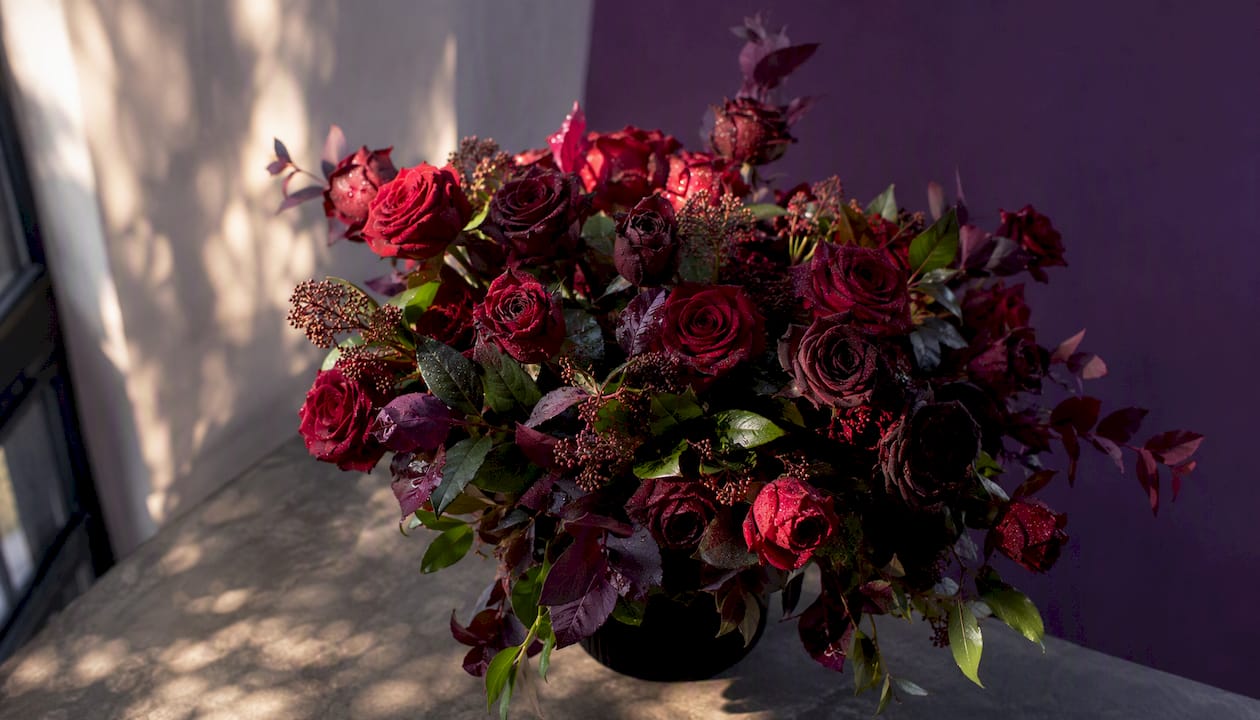
The red rose is the most universally recognized symbol of romantic love and deep passion. A bright, vivid red reads as bold and ardent; a darker burgundy or crimson leans toward devotion and deep respect. For a first Valentine’s Day or a milestone anniversary, a classic red arrangement like the Ruby Romance Bouquet lands the message without ambiguity. Skip red if the relationship is purely platonic, unless you want to spark a conversation.
2. White roses
White roses carry associations with purity, innocence, and new beginnings. They’re a natural fit for weddings, christenings, and sympathy arrangements, where the message needs to feel clean and sincere rather than emotionally charged. A white rose also works beautifully as a gesture of respect or remembrance. If you’re ordering for a wedding, white and cream roses remain the most requested colors by a wide margin.
3. Pink roses
Pale pink says admiration and grace. Deep pink says genuine gratitude and appreciation. The distinction matters more than most people realize: sending a hot-pink bouquet to a mentor reads differently than sending blush pink to someone you’ve just met and want to impress. Pink is one of the most versatile colors in the rose spectrum, appropriate for birthdays, thank-you gestures, Mother’s Day, and any occasion where you want warmth without the romantic weight of red.
4. Yellow roses
Yellow roses today mean friendship, joy, and caring. That’s the modern consensus. Historically, some Victorian guides linked yellow to infidelity or a decrease in love, which is worth knowing if your recipient is a floriography enthusiast. For everyone else, a bright yellow bouquet is a cheerful, uncomplicated gesture for a friend’s birthday, a get-well visit, or a congratulations moment. Pair yellow roses with sunflowers or white daisies for a genuinely sunny arrangement.
5. Orange roses
Orange sits at the intersection of red’s passion and yellow’s friendship, which makes it a strong choice for expressing enthusiasm, fascination, or the early excitement of a new relationship. It’s also a natural pick for congratulations and career milestones, where you want energy and warmth without romantic undertones. Orange ages well in a bouquet, holding its vibrancy longer than some softer shades.
6. Peach roses
Peach is one of the most underused colors in gifting. It communicates sincerity, appreciation, and a kind of quiet warmth that neither red nor pink quite captures. Send peach roses to a colleague who went above and beyond, to a host after a memorable dinner, or to someone navigating a difficult period who needs comfort rather than celebration. The message is essentially: I see you, and I’m grateful.
7. Lavender and purple roses
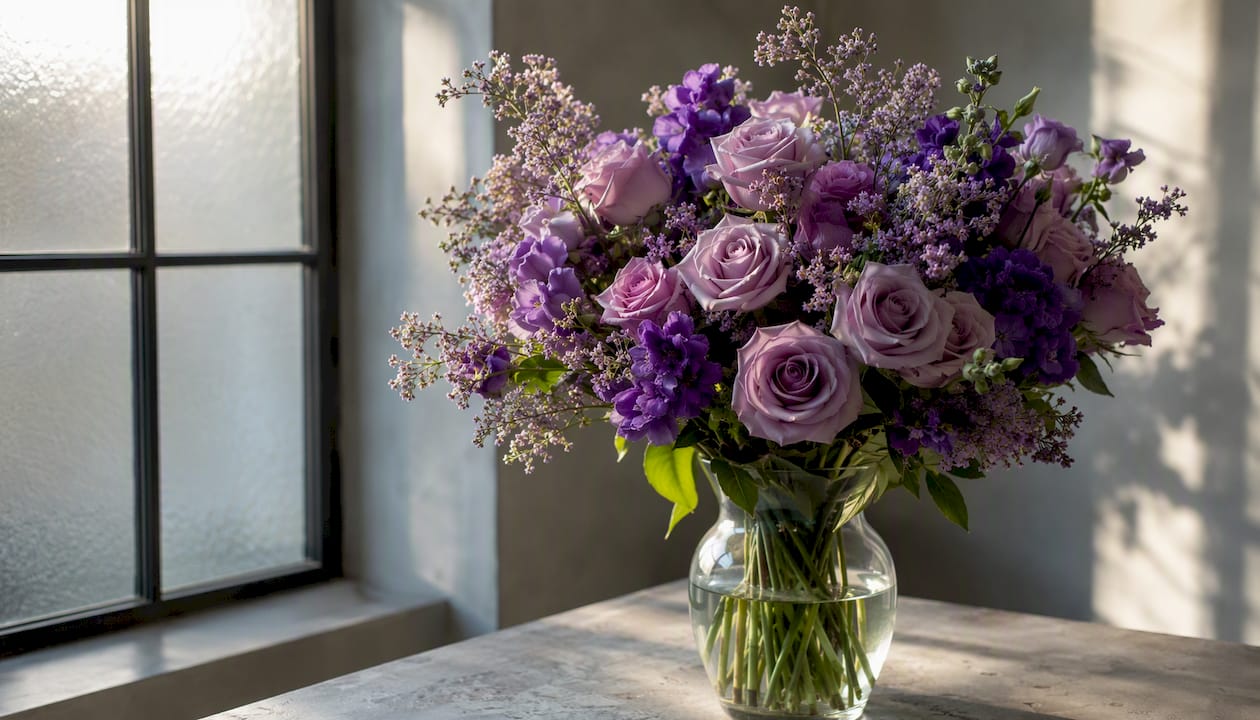
Lavender and purple roses carry associations with enchantment and love at first sight, and deeper purple shades also carry royal and majestic connotations. A lavender bouquet works well for a new romantic interest, a creative person whose work you admire, or anyone you want to tell feels genuinely extraordinary. The color reads as thoughtful and slightly unexpected, which is part of its appeal.
8. Ivory and cream roses
Ivory and cream sit between white and the warmest blush, and they communicate thoughtfulness, elegance, and a certain quiet sincerity. They’re less stark than pure white and less overtly romantic than pink, which makes them ideal for sympathy arrangements, thank-you bouquets, or gifts to someone with refined taste who might find bolder colors too loud.
9. Green roses
Green roses, whether naturally pale green varieties or tinted stems, symbolize renewal, good health, and optimism. They’re a genuinely distinctive choice for a new job, a recovery from illness, or a spring birthday. Green works especially well in mixed arrangements, where it adds freshness and visual contrast without competing with the dominant color’s message.
10. Black and very dark roses
No rose is truly black. What’s sold as “black” is almost always a very deep red or dark burgundy, sometimes dyed. The symbolism attached to these dark roses includes farewell, mystery, and dramatic themes, and occasionally rebirth or transformation. They’re appropriate for gothic aesthetics, theatrical occasions, or a meaningful farewell. Use them carefully in gifting: the association with death and endings is strong enough that most recipients will notice.
11. Blue roses
Blue roses don’t occur in nature. True blue roses are created through dyeing or genetic modification, which is precisely why they’ve come to symbolize mystery, the unattainable, and the extraordinary. A blue rose says: you are one of a kind. They work for someone who appreciates the unconventional, but they can confuse a recipient who isn’t expecting something so unusual. More on blue roses in the rare-colors section below.
12. Mixed and rainbow bouquets
A mixed bouquet layers meanings and, frankly, covers more emotional ground than any single color can. Mixed arrangements are ideal when the occasion is celebratory rather than specifically romantic, or when you genuinely don’t know the recipient’s preferences. The Vibrant Rose Delight is a good example of how a thoughtfully assembled multi-color arrangement can feel generous and personal without requiring you to decode a single color’s symbolism.
How combining rose colors changes the message
Layering colors in a bouquet creates a combined message, but only if the pairing is intentional. A few combinations that work well:
Red + white: Unity of love and purity. A classic pairing for anniversaries and weddings, where the message is both passionate and sincere.
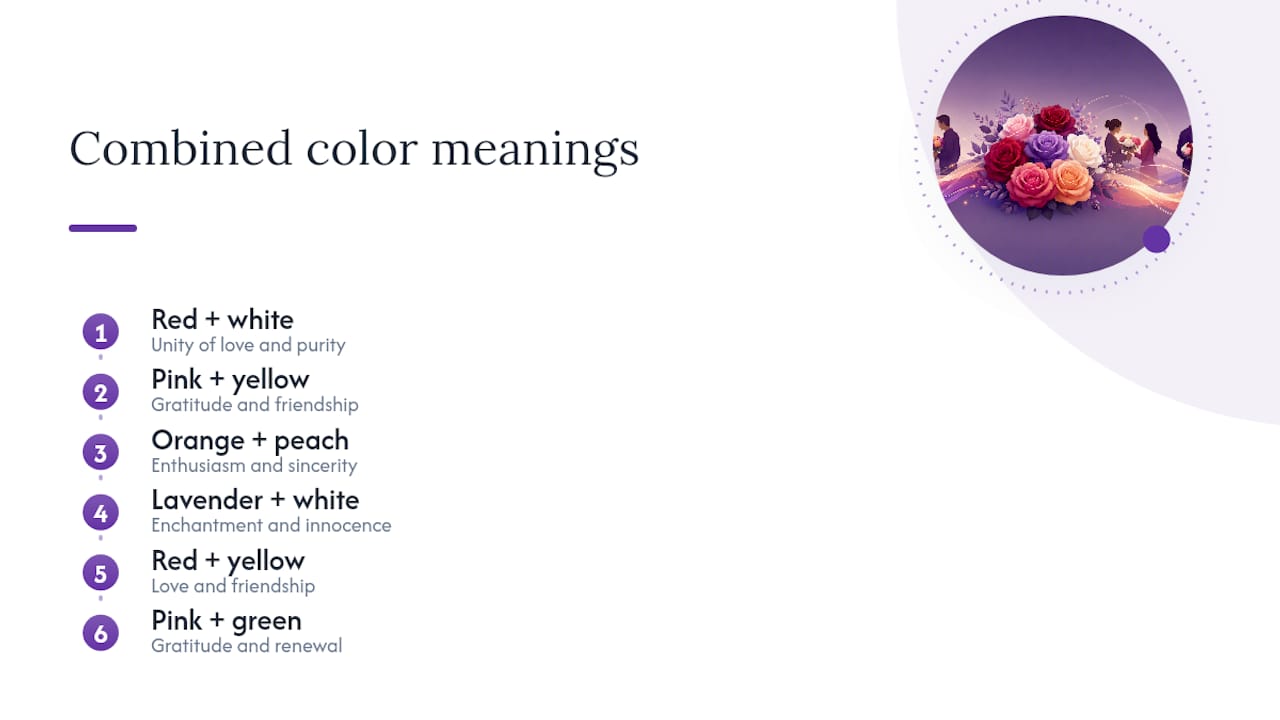
Pink + yellow: Gratitude and friendship together. Strong for a close friend you also deeply appreciate, or for a mentor relationship that has personal warmth.
Orange + peach: Enthusiasm and sincerity. A natural fit for a new relationship or a heartfelt congratulations where you want energy without the full weight of red.
Lavender + white: Enchantment and innocence. Works beautifully for a romantic gesture that feels dreamy rather than intense, or for a creative person whose work you admire.
Red + yellow: Love and friendship combined. A bold, warm pairing for a long-term partner who is also your closest friend.
Pink + green: Gratitude and renewal. A fresh, spring-appropriate combination for a birthday or a get-well gesture, especially in a mixed spring arrangement.
Pro Tip: *When building a mixed bouquet, choose one dominant color that carries the primary message and let the secondary color accent it. A bouquet that splits 50/50 between two equally weighted colors can dilute both meanings and read as indecisive.
What the number of roses in your bouquet means
The count matters as much as the color in many gifting traditions. Here are the most commonly recognized numeric meanings:
- One rose: A single stem says “I love you” with quiet confidence, or signals the beginning of something. It’s a strong first-date gesture precisely because it’s understated.
- Three roses: Often interpreted as “I love you” in a simple, direct triad, or as a nod to a shared past, present, and future.
- Six roses: Infatuation and the desire to be loved in return. A good choice for an early romantic gesture.
- Seven roses: Admiration. Sending seven roses says you’re captivated by someone without the full romantic declaration of a dozen.
- Nine roses: Eternal love and a wish to stay together forever. Less common than twelve but carries a specific, devoted meaning.
- Ten roses: “You are perfect.” A direct, confident compliment.
- Twelve roses: Complete devotion and a classic declaration of love. The dozen is the most recognized romantic count in North American gifting culture, and it’s the standard for Valentine’s Day and anniversaries.
- Twenty-four roses: “You’re always on my mind.” Often given as a grand gesture or for a significant anniversary.
- Fifty roses: Unconditional love, often given for milestone anniversaries like a 25th or 50th.
- One hundred roses: A dramatic declaration of devotion, typically reserved for very significant occasions or proposals.
Cultural variation exists. In some East Asian traditions, certain numbers carry specific luck or unlucky associations, so if you’re gifting across cultural contexts, it’s worth a quick check. For most Canadian gifting occasions, a single stem, a half-dozen, or a dozen are the most practical and well-understood choices.
Why blue, black, and bi-color roses are rare and what they mean
Rarity in roses is almost always a horticultural story. Roses lack the genetic pathway to produce the blue pigment delphinidin, which is why true blue roses don’t exist in nature and are instead created through dyeing or genetic modification. That scientific impossibility is baked directly into the symbolism: blue roses represent mystery, the unattainable, and the extraordinary. They’re a genuinely meaningful gift for someone you see as one of a kind, but they can read as strange or unsettling to a recipient who wasn’t expecting them.
“Black” roses are a similar story. No rose produces true black pigment. What’s marketed as black is a very deep red or dark burgundy, sometimes dyed to deepen the effect. The symbolism of farewell, mystery, and dramatic transformation comes from the visual association with darkness rather than any botanical reality. They’re appropriate for theatrical occasions, gothic aesthetics, or a meaningful goodbye, but they’re a risky choice for anything that needs to feel warm or celebratory.
Bi-color and ombré roses, where petals shift from one color to another, are bred or treated varieties. They carry layered meanings by design, and they work well when you want a bouquet that feels visually distinctive. The message is essentially novelty and thoughtfulness combined.
Dos and don’ts for rare colors: Send blue or black roses only when you’re confident the recipient will appreciate the unconventional. Avoid them for sympathy arrangements, where the association with mystery or endings can feel heavy-handed. For a first gift to someone you don’t know well, stick to the classic palette.
How to choose the right rose color for your occasion
A short checklist before you order:
- Know the recipient’s preferences first. Their favorite color, or the colors they wear and decorate with, is more reliable than any historical guide.
- Match the color to the emotional register. Ask yourself: is this romantic, friendly, celebratory, or comforting? Red and deep pink for romance; yellow and orange for celebration and friendship; white, cream, and peach for sympathy and appreciation.
- Consider shade intensity. Pale and soft shades read as gentle and understated. Bright and saturated shades read as bold and energetic. Match the intensity to the occasion’s emotional weight.
- Think about count alongside color. A single red rose is intimate and personal. A dozen is a statement. A mixed bouquet of twenty-four is generous and celebratory.
- Factor in the card message. A card can clarify or deepen what the color says. If you’re sending yellow roses to a close friend you also love, a short note removes any ambiguity.
- Consider cultural context. If you’re gifting across cultural backgrounds, check whether the color carries specific associations in the recipient’s culture that might differ from the Western tradition.
Pro Tip: If you’re genuinely unsure, ask the florist. A good florist will ask you three questions: What’s the occasion? What’s your relationship to the recipient? Do you know their favorite color? Those three answers will narrow the choice faster than any color dictionary.
For birthday flowers, yellow, peach, and mixed bouquets tend to land best. For love and romance, red and deep pink are the most reliably understood choices.
Where rose color meanings come from and how much to trust them
The system of flower meanings we use today traces back to Victorian-era floriography, a practice that turned flowers into a coded language for private emotional expression. Trade cards, valentines, and printed guidebooks assigned specific meanings to specific blooms, and the practice became genuinely mainstream in 19th-century Britain and North America. The problem is that multiple competing guidebooks existed simultaneously, and they didn’t always agree. English Heritage notes that yellow roses, for example, were linked to infidelity in some Victorian sources and to friendship in others, which is why no single “official” list ever emerged.
Rose symbolism runs deeper than the Victorian era. Roses appear in Ancient Greek mythology, Renaissance religious art, and across Asian and Middle Eastern traditions, each context layering different meanings onto the same flower. That long, cross-cultural history is part of why the symbolism feels so resonant, and also why it’s so variable.
Modern florists, as BBC Culture reports, increasingly treat color meanings as a helpful shorthand rather than a binding code. The practical takeaway: use the traditional associations as a starting point, then adjust for the recipient’s personality, the occasion, and your own intent. A rose chosen with genuine thought will communicate more than the “correct” color chosen by rote.
A florist’s perspective on color and intention
The most common mistake people make when choosing rose colors is treating the decision like a translation exercise, as if there’s a hidden message to decode and the wrong color will send the wrong signal. In practice, the emotional weight of a floral gift comes from the act of choosing and sending it, not from whether the recipient can identify the precise Victorian meaning of peach versus coral.
At Malikflowers, the design process for a custom arrangement starts with the occasion and the relationship, not the color wheel. When a client comes in wanting something for a partner’s birthday, the first questions are about personality and preference: Does she have a favorite color? Does he tend toward bold or understated aesthetics? Is this a milestone or a casual gesture? Color follows from those answers, not the other way around. A lavender arrangement for someone who loves purple will land better than a “symbolically correct” red for someone who finds it clichéd.
The BBC Culture piece on floriography’s modern resurgence captures this well: today’s interest in flower symbolism is driven by personalization, not prescription. People want their gifts to feel considered. Color is one tool for that, but it works best alongside a handwritten note, a count that means something, and a design that reflects the recipient rather than a guidebook.
Fresh roses, chosen for you, delivered across Metro Vancouver
Knowing what each color means is the first step. Getting the right arrangement into someone’s hands is where Malikflowers comes in. Every bouquet is handcrafted to order, which means the color, count, and design are built around your occasion, not pulled from a shelf. Same-day delivery is available across Metro Vancouver, and if the arrangement doesn’t match what you had in mind, Malikflowers offers a full satisfaction guarantee.
Whether you’re sending a dozen red roses for a romantic occasion, a mixed pastel arrangement for a birthday, or a white and cream bouquet for a wedding, the full range of arrangements is available to browse at Malikflowers. Pick the color, choose the count, and let the design team handle the rest.
Sources
These are the primary sources used throughout this article, each worth reading if you want to go deeper:
- Rose symbolism — Wikipedia
- The rose flower — UniGuide
- A Rose by Any Other Name — The Metropolitan Museum of Art
- The language of flowers — English Heritage
- The secret Victorian language that’s back in fashion — BBC Culture
- The flower language of roses — Country Gardener
FAQ
What does a red rose mean?
A red rose is the most widely recognized symbol of romantic love and passion. It’s the standard choice for Valentine’s Day, anniversaries, and any occasion where the message is clearly romantic.
What do 12 roses mean?
Twelve roses traditionally represent complete devotion and a full declaration of love. A dozen is the most recognized romantic count in North American gifting culture, making it the go-to for Valentine’s Day and milestone anniversaries.
What do 7 roses mean?
Seven roses typically symbolize admiration and infatuation. It’s a meaningful count for expressing that you’re captivated by someone without the full romantic declaration of a dozen.
Which rose color is the rarest?
Blue is the rarest rose color because roses lack the genetic pathway to produce blue pigment naturally. True blue roses are created through dyeing or genetic modification, which is why they’ve come to symbolize the unattainable and the extraordinary.
What color rose means “I love you”?
Red is the clearest answer. A single red rose or a dozen red roses is the most universally understood way to say “I love you” with flowers, across North American and most Western gifting traditions.